

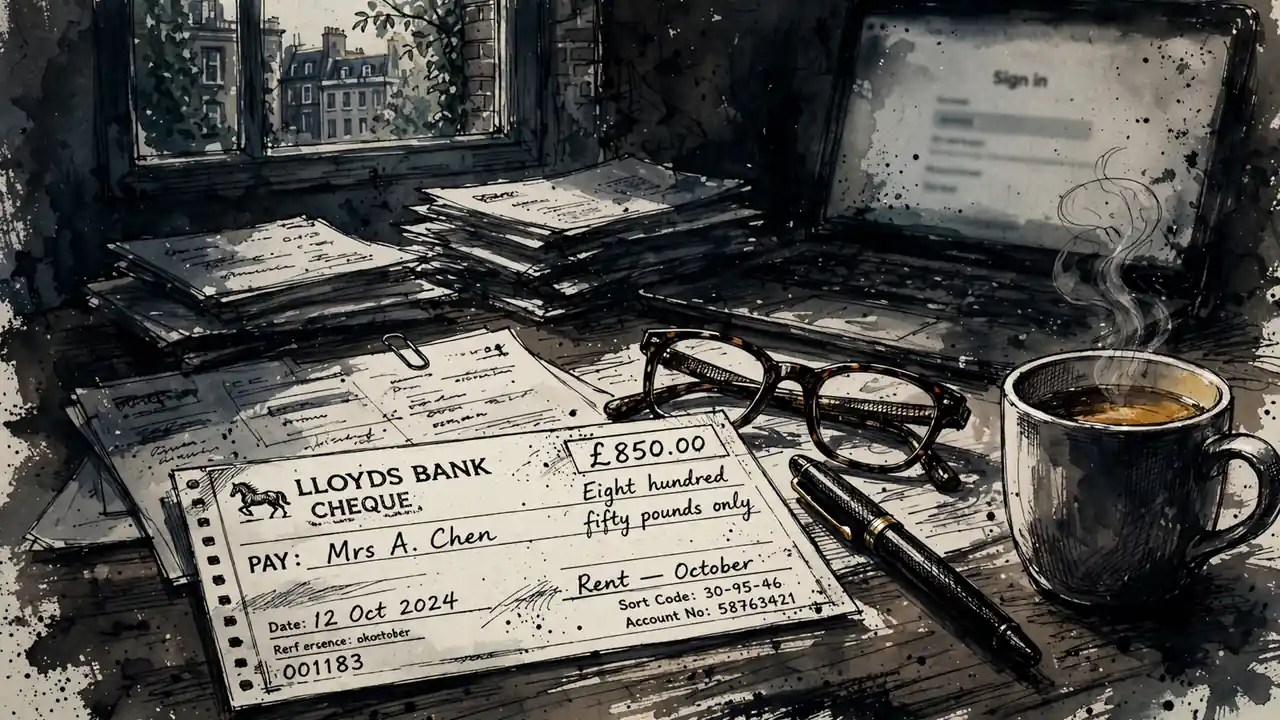
A casino’s general payments page may not reflect the methods enabled for a UK account, so the signed-in cashier is the practical check.
Checking Whether an E-cheque Option Is Actually Available
A payment method mentioned on a casino website is not necessarily an option that can be used by a UK customer. I treat a general payments page as an indication of what the operator may support, not confirmation that e-cheque deposits are enabled for a particular account. The practical check is in the cashier after signing in, where the available methods are shown in the context of that account and its market.
That distinction matters because payment information can describe several things at once: methods supported somewhere by the operator, methods offered in a particular country, and methods currently available to an individual customer. Those are not interchangeable. A page that refers to e-cheques does not, by itself, establish that a UK account can select one or complete a deposit with it.
Start with the account cashier
The most useful place to check is the casino’s own cashier, reached through the signed-in account. The deposit area should show the payment methods that are currently presented for that account. If e-cheque appears as a selectable option, that is more meaningful than a passing mention on a general page. It is still worth reading the instructions attached to the option, because the label alone may not explain which customers or transactions it covers.
If the method is missing from the cashier, that is a relevant result. It may mean the option is not currently offered to that account, even if the casino’s wider website mentions it. I would not infer availability from an old review, a search result, or a page written for another market. Payment menus are operational details; promotional and information pages can remain visible after those details have changed.
The same caution applies when the cashier uses a broader label. A phrase such as “bank payment” should not be treated as proof that the casino accepts e-cheques. The payment method needs to be identified clearly enough to tell what is being selected. If the page does not make that clear, the uncertainty has not been resolved.
Casinos That Accept Entropay in the UK: What’s Confirmed
Check the UK context, not just the brand name
A casino can operate across different markets, while its payment arrangements differ by country. A site-wide list therefore cannot settle whether a method is available to a UK account. The country attached to the account and the options shown after sign-in are the relevant context.
I have seen payment pages that read like a catalogue: familiar logos, short descriptions, and no indication of which options apply to each market. That is useful as an overview, but not as a transaction check. The cashier is where the operator has to present the route that can actually be selected for the account in front of it.
A specialist review may also list payment methods, but it is secondary evidence. It can help identify a method to look for; it cannot confirm the current cashier menu for a particular UK customer. Even a recent-looking page may describe the operator generally rather than the live options available after login. The distinction is simple. Mentioned is not enabled.
Read the method details before treating it as confirmed
If e-cheque is shown, the accompanying instructions should clarify whether it is available for the intended transaction and what information is required to use it. A tile or logo without usable instructions is not enough to establish that the route is operational. Nor should a method be assumed to be e-cheque merely because it involves a bank account or appears beside other bank-related options.
When the wording is unclear, the operator’s support team can be asked a narrow question: whether e-cheque deposits are currently available to UK accounts, and whether the option shown in the cashier is the one meant by that term. A precise answer is more useful than a general assurance that the casino supports a range of payments. If support points to a page, the page should still be checked against the signed-in cashier.
This is not needless formality. Payment names are easy to copy between pages; availability is a live account setting. A list can be accurate in one context and misleading in another without anyone having changed the text deliberately.
DO
- Check the casino’s own cashier after signing in
- Read the specific instructions attached to the payment option
- Confirm the method is selectable in your specific account
DON’T
- Infer availability from old reviews or search results
- Assume a general mention on a website means it is enabled
- Treat broad labels like “bank payment” as proof of e-cheque support
What counts as a useful confirmation
For practical purposes, there is a difference between a method being named, being displayed in the UK account’s cashier, and being selectable with clear instructions. The first is a claim about the site. The latter two provide stronger evidence about the current account-level option. If the information conflicts, the live cashier and a clear response from the operator matter more than a broad marketing page.
I use the same standard with familiar card names. A specialist review may list Visa or Mastercard, but current UK availability and the eligibility of a particular card product still need to be checked in the cashier. The brand name alone does not settle whether that specific route is usable. E-cheque should be checked just as carefully.
The account details should also be accurate before any payment route is considered. Using account information and a payment route belonging to the same customer can reduce avoidable friction over basic ownership details. That does not prove a method is available, and it does not replace checking the cashier. It simply avoids introducing a separate mismatch into the process.
The practical conclusion is narrow: an online casino’s general payment list can provide a lead, but it cannot establish that the casino accepts e-cheque deposits for a UK account today. The signed-in cashier is the account-specific check; clear method details and operator confirmation resolve ambiguity. No live option, no confirmation.
Casinos That Accept Ethereum in the UK: Payment Checks
How Casino Deposits and Withdrawals Fit Together
A payment method that can put money into a casino balance does not automatically provide a route for taking money out. The two transactions travel in opposite directions and may be governed by different rules. A deposit option confirms that the casino can receive funds through that route under the conditions shown; it does not, by itself, confirm that the casino can send a payout back through it.
That distinction matters when assessing an e-cheque payment. A site might describe e-cheques as a way to fund an account, but that wording alone does not establish whether the same method is available for withdrawals, whether it can receive them, or whether a different route will be required. The full transaction path has to be understood, not inferred from the deposit label.
I have seen payment descriptions create a false sense of symmetry. “Deposit and withdrawal method” sounds like one service working equally in both directions. In practice, a provider may support incoming payments for a particular merchant without offering the casino a corresponding payout facility. A casino may also have rules that direct withdrawals elsewhere, even when the original deposit reached the account successfully.
The original-source principle
For UK gambling accounts, anti-money laundering controls generally mean that payouts should return to the original payment source. This is often called a closed-loop approach: money is not treated as freely transferable between unrelated payment routes simply because it appears in the same casino balance.
The purpose is practical. Returning funds to the source helps the operator check that money is going back through the channel from which it arrived, rather than being redirected to an unrelated destination. It also supports anti-fraud controls. The principle can shape the route of a withdrawal even where the deposit itself was straightforward.
The original-source principle often means that funds must be returned to the same channel they arrived through to comply with anti-money laundering controls.
“Same source” is not always as simple as matching a method name. The operator may need to consider how the payment was made and what destination the provider can accept. A deposit route can therefore be recognised by the casino but still not be usable as the final payout destination. The relevant question is not merely whether the method appears in a list; it is whether the whole payment path can operate in both directions under the casino’s rules.
That is why a search for an e-cheque casino should not stop at a deposit claim. A statement that e-cheques are accepted for funding does not prove that e-cheques can receive winnings. Nor does it prove that a withdrawal will be sent by another method automatically. The cashier’s withdrawal information and the operator’s payment terms determine what route is actually offered.
When a different route is involved
There can be cases where a payout cannot return through the original channel, or where the casino directs the funds through an alternative. That does not mean the original-source control has disappeared. It means the operator may need to establish why the alternative is appropriate and confirm that the destination belongs to the account holder. Additional verification may be required.
This is a control point, not necessarily a sign that anything has gone wrong. From the operator’s side, changing the destination without checking it would weaken the link between the incoming payment and outgoing funds. From the account holder’s side, an alternative route can introduce another step before the transaction is cleared. The reason for the check is the route change itself.
Casinos That Accept Tether in the UK: Payment Checks
The distinction also prevents a common misunderstanding: a successful deposit is evidence that a particular incoming transaction was accepted, not a promise about every later transaction. Deposit processing and payout handling are separate stages. Each has its own permitted routes and checks, while the original-source principle connects them.
In practical terms, the payment journey should be read as a sequence: funds enter through a method the casino accepts, the balance is held in the account, and a withdrawal is then assessed against the rules governing where funds may be returned. The middle step does not erase the origin of the money. A casino balance is not a free transfer point between payment services.
I would treat any broad claim that a method is “for deposits and withdrawals” as incomplete until the withdrawal route is clear. The useful detail is whether the casino can return funds to that source, and what happens if it cannot. For e-cheques, as for any named route, the deposit label alone cannot answer that.
The key distinction is simple: acceptance in one direction is not proof of acceptance in the other. The original source remains central, and an alternative destination can bring further checks. That is the transaction flow behind the wording.
What Makes a Payment Route Work Consistently
A payment route is easier to assess when the casino account and the named payment account clearly belong to the same customer. In practice, I regard that consistency as a basic piece of transaction hygiene: the identity attached to the gambling account should not appear to conflict with the identity attached to the payment route. It does not guarantee that a transaction will pass every check, but it can remove avoidable questions about who owns the funds or the account being used.
Payment Hygiene
- Verify that the casino account name matches the payment account name
- Check that the payment method is available in the live cashier
- Confirm the ownership trail is consistent between accounts
That principle applies whether the route is described as an e-cheque, a card, a bank service or an e-wallet. The label matters less here than the ownership trail. An e-cheque option on a cashier page, for instance, says nothing by itself about whether a particular account holder’s details will align with the details used for payment. The practical issue is not the name of the method; it is whether the payment information and casino registration point to the same person.
I have seen payment journeys become more complicated when customers treat account details as interchangeable. A shortened name on one account, a different surname on another, or a payment account held by someone else can create a mismatch that needs explaining. These differences may have an innocent cause, but a payment team cannot safely assume that. Its job is to establish that the customer and the source of funds are connected as represented. When the core details line up, there is less basic uncertainty to resolve.
That is the useful distinction between consistency and compatibility. A payment route may appear as an available option, yet ownership details can still affect how smoothly it is used. Consistency means that the customer’s casino account and named payment account tell the same identity story. It does not mean that every payment route is available for every transaction, or that a method can be used in both directions. Those are separate questions. Here, the concern is whether the account information itself creates needless friction.
Casinos That Accept MuchBetter in the UK
KYC checks are part of that picture. They are not merely a box to tick after a payment has been made; they help the operator understand who holds the account and whether the transaction fits the customer’s recorded details. If the casino account is registered to one person while the named payment account belongs to another, the operator may need to look more closely. The same can apply when key details differ enough that ownership is unclear. A consistent trail cannot replace KYC, but it can reduce the chance that a straightforward ownership question becomes a complication.
There is a commercial reason the process is handled carefully. A casino cannot treat a payment instruction as proof that the person entering it owns the underlying account. Operators have to manage fraud and financial-crime risks, and basic identity mismatches are one reason a transaction can be held for review. From the outside, that can look like needless administration. From the inside, accepting a payment without resolving an ownership concern can create a much larger problem.
The cleanest route is often one named account used consistently for deposits and payouts. In practical terms, this means avoiding a patchwork of accounts with different owners or conflicting registration details. It also means keeping the casino profile accurate, rather than expecting a payment provider’s records to explain a discrepancy automatically. A coherent account trail is easier to interpret than one that changes from transaction to transaction.
Casinos That Accept Bank Cheques in the UK
This matters for e-cheque users because the method name can draw attention away from the identity behind it. Searching for an e-cheque casino does not answer whether the payment account is in the same customer’s name as the casino account. Nor does using a mobile cashier change that underlying point. The device may alter how the payment form is presented, but it does not make different ownership details equivalent. The account relationship remains the central issue.
I would not describe consistent details as a shortcut around checks. That would overstate the point. An operator may still need to verify an account, and a payment can still be reviewed for reasons unrelated to a name mismatch. Consistency simply removes one avoidable source of ambiguity. The difference is modest but important: it can make the information easier to reconcile without suggesting that any check will be skipped.
The same logic applies when a customer changes payment accounts. A new named account may belong to the same person, but the casino may have to establish that connection before treating it as part of the existing transaction history. Repeatedly switching between accounts can make the ownership picture less straightforward than keeping one route stable. This is not a claim that variation automatically causes a problem; it is a recognition that every unexplained difference gives a reviewer another detail to assess.
In payment operations, clarity has value. Matching customer and payment-account information reduces the chance that basic ownership details become the reason a transaction needs extra attention. Not a guarantee. A cleaner trail.
Casinos That Accept Neteller in the UK
Deposit Amounts, Limits and the First-Deposit Check
A deposit limit is not one figure that applies across an entire casino account. The minimum shown for a transaction can depend on the payment method selected, while the maximum may be set separately for an individual deposit, a day or a month. Account status can also affect the ceiling. That makes a general figure a poor substitute for the limit displayed during the actual transaction.
A specialist review puts some casino minimum deposits in the £10–£20 range, depending on the chosen method. That is a reported range, not a promise that every cashier will show those amounts. The live terms and cashier are more relevant than a general guide: operators can set different thresholds, and those terms may change. An e-cheque search result, for instance, cannot establish what minimum would apply to a particular account or whether a stated amount remains current.
The same caution applies to maximums. A casino may distinguish between the largest single deposit and the amount that can be deposited across a day or month. A specialist review describes these limits as varying with both the payment method and the account’s status; it does not make one maximum applicable to every customer. The cashier may show a transaction cap, while the account interface may show broader controls. They serve different purposes.
Limits are part of account controls
At a UKGC-licensed casino, the first deposit sits within a financial-control process, not outside it. Remote gambling operators must prompt new customers to choose a financial limit before that initial deposit can be made. They must also make account-level limit controls accessible, so limits are not confined to a one-off prompt at registration.
Financial Limits
At a UKGC-licensed casino, the first deposit is part of a financial-control process. New customers must choose a financial limit before their initial deposit can be made, and account-level controls must remain accessible.
In practice, the first-deposit step can therefore involve two separate checks: the amount being entered must fit the cashier’s transaction rules, and the account must have the required financial limit set. A payment amount that fits one does not replace the other. The distinction matters because a deposit cap governs what a particular transaction or method can accept, whereas an account-level control is a broader safeguard set within the gambling account.
From the operational side, I have seen how easily those concepts get blurred in interface copy. A page may call a figure a “limit” without making clear whether it applies to one deposit, a wider period, or the customer’s own account settings. The label alone is not enough. Check what the figure applies to before treating it as the amount available for a transaction.
What to check before entering an amount
The useful details are the minimum and maximum shown for the intended deposit, the period attached to any broader cap, and whether the displayed figure is specific to the selected payment method or the account overall. If the cashier gives one figure and the account controls show another, they should not be assumed to describe the same restriction. The operator’s terms or support team can clarify which rule applies.
This is particularly relevant when a method has been mentioned in general information but its conditions are not stated there. A named payment route does not tell the customer its minimum or maximum. Nor does a published general range establish what a specific account will be allowed to deposit. The transaction screen and account controls provide the more useful context.
Casinos that accept Boku in the UK: what to know
There is no advantage in entering an amount first and interpreting the rules afterwards. The first-deposit prompt is a required part of the UKGC framework, while cashier caps can vary by method and account status. Read together, those controls explain why a deposit can be subject to more than one threshold, without implying that any particular e-cheque casino applies a particular amount. Small print, then the cashier.
Other Payment Routes Available at UK Casinos
An e-cheque is a specific payment route, not a general label for electronic deposits. Its presence in a casino’s payment information should not be confused with the availability of other methods. The wider UK casino landscape includes familiar alternatives, but each has its own terms and role.
Debit cards are a common route. UK casinos often accept Visa and Mastercard debit cards, giving players a way to fund an account through a card linked to their bank. The brand alone does not settle every practical detail: card products and casino arrangements differ, so the cashier’s listed method is the relevant reference for a particular account.
That distinction matters when comparing a card with an e-cheque. Both may involve a bank account somewhere in the process, but they are not interchangeable names for the same service. I have seen payment descriptions treated as if they were broad categories; that is where expectations go wrong. A card option does not establish that an e-cheque option exists.
PayPal is another recognised alternative, valued for the speed and convenience associated with its account-based payment process. A specialist review has also reported that PayPal may be excluded from bonus eligibility at some casinos. That is a point to verify in the promotion’s own terms, not a universal rule: bonus conditions can be tied to the method used, and the wording can determine whether a deposit qualifies.
Debit Cards
Commonly used via Visa or Mastercard to fund an account through a bank-linked card.
PayPal
An account-based payment process valued for speed and convenience, though it may have specific bonus eligibility rules.
Promotional eligibility is separate from whether a payment route can be used at all. A method may appear in a cashier while a specific offer applies only to selected payment types. In practice, the useful comparison is not simply “which methods are listed?” but whether the chosen route fits the intended transaction and any promotion attached to it.
Debit cards and PayPal therefore provide context for the wider payment mix, not evidence that a casino accepts e-cheques. Nor does a familiar brand make the terms identical from one operator to another. Payment labels are only the starting point. Conditions matter.
Comparing Payment Costs Without a Universal Winner
A payment method cannot be called the cheapest just because its cashier entry carries no visible charge. I compare the cost of the transaction as a whole: what the casino may deduct, what the payment provider may charge, whether a bank or card issuer adds a fee, and whether currency conversion or network costs apply. The result depends on the route and the amount being moved.
That distinction matters when comparing an e-cheque with another option. A label such as “free” may describe only the casino’s side of the transaction. It does not establish that the provider or financial institution involved will make no charge. Nor does a fee shown for one transaction settle what a different payment amount would cost. The comparison has to match the intended route and transaction.
A specialist review’s comparison of payment costs makes the same practical point: there is no single method that is reliably the lowest-cost choice in every case. I have seen the mistake made in both directions—assuming that a flat fee makes a route expensive, or treating the absence of one as proof that it is cheaper. Neither conclusion accounts for the full price.
Casinos That Accept USDC in the UK: Payment Guide
Currency conversion can change the result without appearing as a separate fee. A route may show a modest, explicit charge while using an exchange rate whose spread adds more to the cost. Conversely, a visible fee may be the main charge, with no comparable conversion cost. The numbers need to be assessed together, not read as isolated labels.
For an e-cheque casino comparison, the useful question is therefore not which payment type sounds cheapest in general. It is what the chosen casino and payment route would cost for the specific transaction, in the account’s currency, after any provider, bank, conversion and network charges are considered. A “best” label in a review can hide that difference if it ranks methods without stating which costs it counted.
I would also separate a casino’s own charge from a third party’s. The cashier may display the operator’s fee, while a bank statement or provider terms reveal another cost. Those are not contradictory figures; they come from different parts of the payment chain. The complete comparison takes both into account.
No universal winner.
The Charges That Can Sit Behind a Casino Payment
An e-cheque payment can look like a single transaction on the casino screen, but its cost may involve several parties. A specialist payment review identifies possible charges from the casino, the payment provider, a bank or card issuer, currency conversion and the payment network. That does not mean every e-cheque transaction carries each charge. It means the displayed amount is not necessarily the only figure worth checking.
Attention A zero-fee label at the cashier only describes the casino’s side; it does not account for potential charges from providers, banks, or currency conversion spreads.
A casino may state that it does not charge for a transaction, while a provider or bank applies its own tariff. The distinction matters: a zero-fee label at the cashier describes the casino’s side, not necessarily the full route. In my experience, the wording is often technically accurate and still incomplete from the customer’s point of view.
Currency conversion is another layer. If the casino account and payment account use different currencies, the conversion rate may include a spread: the difference between the rate applied and a reference market rate. A specialist review notes that this spread can cost more than a visible flat fee. The fee attracts attention because it is explicit; the exchange-rate difference can be less obvious in the final debit.
Network costs may also sit behind a payment, depending on the route and how it is processed. These are not interchangeable with a casino fee, and they may not appear in the cashier before a transaction is made. The relevant terms can be split between the casino’s payment page, the provider’s pricing information and the bank statement.
For an e-cheque casino payment in the UK, the useful calculation is therefore the total amount leaving the account, not just a fee shown beside the deposit option. A small stated charge can be only one part of the cost. The rate can matter more.
Confirming Deposit Compatibility and Account Currency
A payment logo on a general information page is not the same as a working option for a particular UK account. I treat the cashier as the decisive check: it shows which methods are available for that account at the time of the transaction. A method may be described elsewhere but not appear in the deposit menu, or the displayed option may depend on account details. For e-cheques, the practical point is simple: the cashier must offer the method before it can be used. A page mentioning it is not confirmation.
Casinos That Accept Interac in the UK: What to Check
The same distinction applies to cards. Specialist reviews list Visa and Mastercard, but that does not establish that every card product is eligible or currently usable in the UK. The cashier is where those conditions become concrete. If a card is listed but a transaction is declined, the issue may be product eligibility rather than a general failure of the payment system.
Currency needs its own check, not an assumption based on the account being registered in Britain. Specialist review pages indicate that GBP is supported, but the account currency should still be confirmed before the first payment. A deposit made in pounds can still involve conversion if the casino balance is held in another currency; the payment amount and the credited balance then need not match after conversion.
I have seen “GBP supported” used as shorthand for a broader claim than it proves. It may describe an available currency setting, not the setting already attached to a particular account. The useful check is the currency shown in the cashier or account settings, alongside the amount that will be debited and credited. If those figures are presented in different currencies, conversion is part of the transaction, not a minor detail buried in a payment description.
This is compatibility at transaction level: the method is visible, the account can use it, and the balance currency is understood before funds move. A logo alone proves little.
Why a Fast Deposit Does Not Guarantee a Fast Payout
A deposit and a withdrawal travel through different checks. A cashier may confirm a deposit promptly, but a payout still has to pass the casino’s internal approval process. The displayed payment speed describes only part of that journey.
Casinos That Accept E-Check in the UK: What to Check
A specialist review notes that withdrawal timing depends on both the operator’s approval process and whether the account is fully verified. That distinction matters: a payment can be technically ready to send while the account review is still outstanding. A quick deposit is not evidence that those checks have already been completed.
The first withdrawal can take longer because verification may be completed at that point. In practice, the operator may need to resolve outstanding KYC checks before approving the request. Until that review is finished, the payout can remain pending inside the casino rather than being on its way through the payment system. Different stages, different clocks.
I have seen “fast payouts” used as if the phrase described the whole process. Often it describes a later stage, after approval, while saying little about how long approval itself takes. The wording is not necessarily false; it is incomplete. The operator’s withdrawal terms and account notices are more useful for understanding which stage is being timed.
For a first payout, the important question is therefore not only how quickly a payment route can deliver funds, but whether the account is ready for the casino to release them. Once verification is complete, the operator still has to approve the withdrawal before the payment provider or bank can process it. A later payout may follow a different path if account checks are already settled, but timing remains dependent on the operator’s process.
A deposit confirmation is not a payout estimate. The approval queue comes first.
UK Rules That Shape Casino Payment Choices
Payment labels do not override the rules governing how gambling funds are supplied. In Great Britain, credit-card payments for gambling have been prohibited since 14 April 2020, and the restriction remains in force. It covers more than a card number entered directly into a casino cashier: remote gambling licensees must also reject a wallet payment when that wallet can pass credit-card funds on for gambling. Routing does not change the source of the money.
That distinction matters when looking at e-cheque casinos for UK players. The name of a payment route does not, by itself, establish whether a particular transaction is permitted or available. The relevant question is how the payment is funded and processed under the operator’s UK obligations. A payment method cannot be treated as a workaround for the credit-card ban simply because the casino does not receive a card payment directly.
Age checks come before deposits, not after a player has begun gambling. Operators must establish that a customer is old enough to use the account before accepting funds. In practice, that means an account may need to pass age verification before the cashier permits a deposit. Payment setup and identity checks are therefore connected: a visible deposit option is not a promise that an unverified account can use it.
There is also a financial-control step at the start of the customer relationship. UKGC rules call for remote operators to ask new customers to choose a financial limit before their first deposit, while keeping account-level limit controls available for later use. That is separate from a payment provider’s own transaction cap. One governs the customer’s chosen gambling controls; the other concerns how a particular payment route handles a transfer.
From the operational side, these safeguards are built into account access and cashier flows, rather than left to a payment label. The funding route still has to fit the rules. No shortcut.
Why can a fast payout casino still delay my withdrawal?
A fast payment method does not skip the casino’s internal approval. Withdrawals can take longer while a first payout is reviewed or account verification is completed.
Are fast casino withdrawals guaranteed?
No. The timing depends on the casino’s approval process, whether your account is verified, and the payment method.
Is Skrill available?
Yes, Skrill is offered at some UK-friendly casino sites and remains a common deposit method. It may be excluded from promotions.
Can I deposit in GBP?
Yes, GBP is supported on the supplied sites. Check your account currency before depositing to avoid conversion costs.
What is the current minimum deposit?
The minimum deposit usually starts at £10–£20, depending on the payment method.