

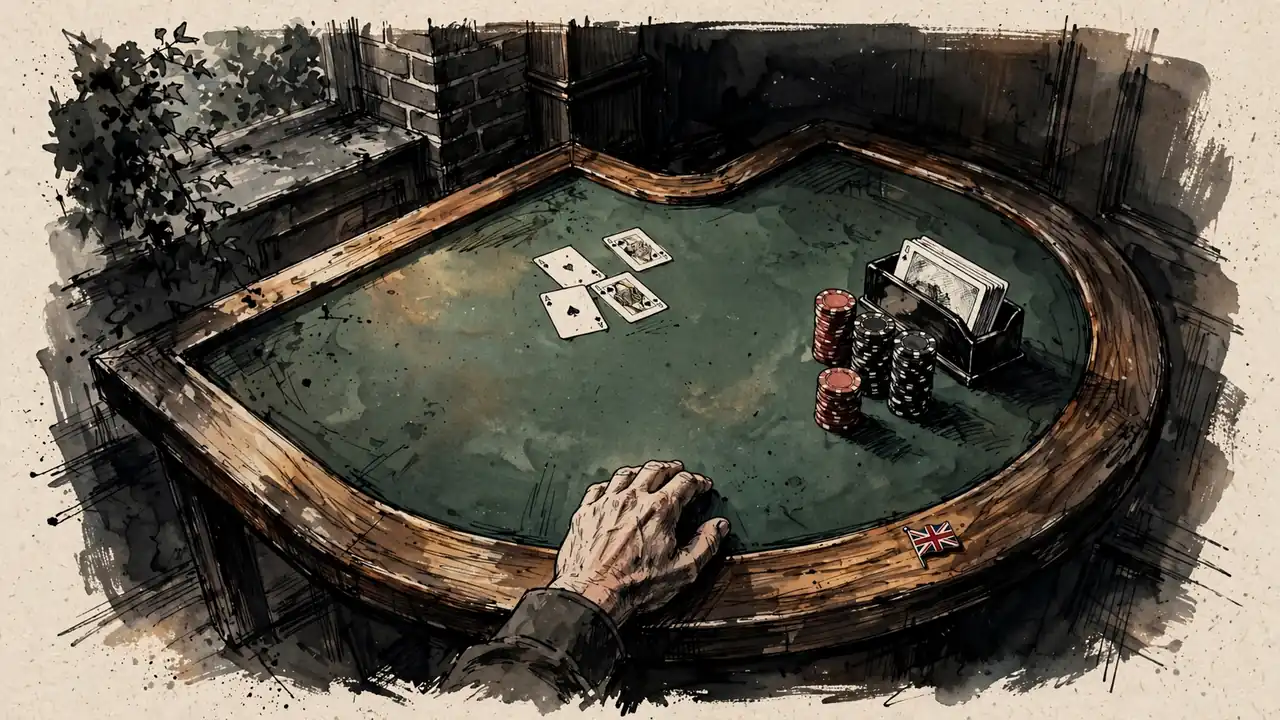
A practical guide to UK licensing, live dealer play, blackjack formats, bonus terms and the limits of strategy.
Blackjack Casinos in the UK: The Licence Comes Before the Table
A blackjack site can make its tables look like the main event: familiar layouts, a choice of games and the promise of a smooth session. I have learned to put that presentation second. For a real-money casino serving Great Britain, the first question is whether the operator holds the relevant Gambling Commission licence. The licence is not a badge for the game itself; it is part of the legal framework that permits the business to offer gambling to customers here.
The UK Gambling Commission oversees gambling activity across the United Kingdom, including online casino services. In Great Britain, it is the sole regulator for commercial gambling. That distinction matters because regulation is not determined simply by where a company is incorporated or where its staff are based. Remote gambling offered to consumers in Great Britain falls within the Commission’s remit even when the equipment that runs the service is located elsewhere.
Casino Games: Slots, Live Tables and Online Games
In practical terms, an operator cannot avoid the British licensing requirement by hosting its website or gaming systems abroad. If it serves customers in Great Britain with remote gambling, it must hold the relevant licence. The location of a server may be a technical detail; it does not replace the regulatory question. That is the point advertising rarely leads with.
The word “licensed” can also obscure who has been licensed. The Commission issues operating licences to businesses and personal licences to individuals working in regulated roles. These are different permissions, with different holders. A casino’s operating status is therefore not established by a staff member’s credential, a provider’s licence, or a general statement that the brand is regulated. The relevant check concerns the business responsible for providing the gambling service.
This is why I treat the operator’s identity and its licence as connected questions. A brand name on a page may not, by itself, make clear which legal business runs the casino. The licensing information should let the business be identified, and the public register is where the stated licence can be checked. Before depositing, verify the operator’s licence number on the UK Gambling Commission’s public register. A logo or a line of small-print wording is a claim; the register is the check.
Live Baccarat Online Casinos in the UK: What to Check
That check does not amount to a recommendation that a particular blackjack site is suitable. It establishes a more basic point: whether the business appears within the local regulatory system required to offer remote gambling to Great Britain consumers. The distinction is easy to lose when several brands share a group, or when a site foregrounds its games and gives the operating company less attention. A familiar name is not a substitute for identifying the licence holder.
“Regulated” is often used as a reassuring adjective. What sits behind it is a defined relationship between the operator and the regulator, not a promise that every hand will be enjoyable, that a player will win, or that every commercial condition will suit every customer. I would not read the word as a guarantee about outcomes. It describes oversight and permission to operate within the relevant framework.
The check also has a geographic boundary. The Commission’s role as the sole regulator for commercial gambling applies to Great Britain. The broader description of its work covers gambling activity in the United Kingdom, including online casinos, but the specific remote-operator licensing requirement discussed here concerns consumers in Great Britain. Keeping those terms precise avoids treating every part of the UK as if the same legal arrangements necessarily applied in identical ways.
The UK Gambling Commission is the sole regulator for commercial gambling in Great Britain, overseeing remote gambling services even if the technical equipment is located abroad.
For someone considering blackjack online, this framework comes before questions about the table. A polished interface, a live-stream image or a large game menu cannot answer whether the business has the required authorisation. Nor does the fact that a site is reachable settle that question. Access and licensing are separate matters. The relevant issue is whether the operator offering real-money gambling to Great Britain customers holds the appropriate Gambling Commission licence.
I have seen how easily a casino’s presentation can steer attention towards what is visible and immediate. A table is visible; the legal entity behind it may be less so. That is precisely why licence checks belong at the start of an assessment, rather than being treated as a final formality after an account has been opened. It is a basic threshold, not a finishing touch.
The same discipline applies to every blackjack format offered under a casino brand. A game’s title or appearance does not establish who is legally providing the gambling service. The operator remains the central licensing question. A player should only gamble what they can afford to lose, and the decision to proceed should not rest on presentation alone.
Check the business. Check its licence. Only then does the table become relevant.
What “Best” Means When Comparing Online Blackjack Casinos
“Best” is not a property a casino can establish with a banner. It depends on the conditions behind the offer and on whether those conditions hold up when something goes wrong. When I compare online blackjack operators, I separate the claims made in advertising from the details that can be checked: the operator’s regulatory record, account controls, complaints process and the wording attached to promotions.
That approach is more useful than a league table. A site can look polished and still leave important questions unanswered. Conversely, a restrained presentation tells little by itself about the quality of the service. The paperwork and account terms matter more than the adjective.
Keno Online Casinos in the UK: Licensing and Checks
Check the operator, not just the brand
A casino brand and the business responsible for it are not always presented in the same place. I look for the legal operator named in the site’s terms, then compare that identity with the Gambling Commission’s public register. The licence number should be checked on the register before depositing; a logo or a statement on the casino’s own pages is not a substitute for that check.
The register is also a time-specific record, not a permanent endorsement of every claim a brand might make. A public Gambling Commission register check dated 26 September 2026 did not identify a LuckyPays entry under that brand or its stated domain, including luckypays.io. That is a specific finding about what the register showed on that date. It does not, by itself, establish why an entry was absent, so the practical point is narrower: the claimed operator identity and licensing position could not be confirmed from that register check. I would not treat an unverified claim as equivalent to a confirmed licence.
This is where a comparison can become misleading. A page may feature a familiar logo, talk about “trusted” play, or present a licence statement without making the responsible legal entity easy to identify. I treat “trusted” as a sales description until the operator and its register entry can be matched. Identity first.
Compare the account controls
A casino’s account settings are part of its operating conditions, not decorative features. Remote operators must prompt new customers to set a financial limit before the first deposit and provide accessible controls for account-level limits. I would check whether those tools are visible and usable in the account area, rather than relying on a general responsible-gambling statement in the footer.
Account Controls Checklist
- Verify the operator’s name on the Gambling Commission public register
- Confirm the presence of financial limit tools in the account area
- Check for accessible self-exclusion and responsible-gambling options
- Locate the internal complaints process and ADR details
A UK-licensed casino must also provide responsible-gambling tools, including self-exclusion. The useful comparison is not simply whether a site names a tool, but whether the account presents a clear route to it and explains what the setting does. If the only reference appears in promotional copy, that is weaker evidence of a practical control than an accessible account setting.
The same principle applies to support information. Look for a clear way to raise an account issue and for terms that identify which operator is responsible for responding. A well-presented lobby cannot answer those questions. Nor can a blackjack table.
Read the route for complaints
UK Gambling Commission licensees must have an internal complaints process and provide access to an approved Alternative Dispute Resolution service. In a comparison, I look for the complaints policy and the stated route from an initial complaint to an independent service if the issue remains unresolved. The wording should make clear who handles the complaint and how the next step is reached.
This is a useful test of transparency. A policy hidden behind vague contact language leaves more work for the customer; a direct, intelligible process makes the operator’s obligations easier to assess. It does not promise a particular outcome. It shows whether the route is set out.
Treat promotional language as a claim to verify
Promotional copy is designed to make an offer feel simple. Its terms establish the actual conditions. Before valuing a headline offer, I check the eligibility wording, any restrictions on what it can be used for, and the conditions that apply before a withdrawal. If a key condition is difficult to find or described differently across pages, the headline should carry little weight in a comparison.
Progressive Slots Online in the UK: How Jackpots Work
This does not require assuming that every offer is misleading. It means comparing like with like: the stated benefit against the rules attached to it, rather than one banner against another. An attractive phrase is not a usable measure on its own.
Finally, no comparison changes the underlying risk of gambling. Blackjack can result in losses, and a favourable-looking set of account conditions cannot remove that. Only wager what can be afforded to lose.
Live Dealer Blackjack: The Table, the Stream and the Operator
A live dealer table puts a human dealer and a physical gaming area on screen while play is presented through a video stream. It is different from a digital table where cards and other elements are generated entirely on screen: the live format centres on a real dealer, with the online interface carrying the action to remote players. The screen is the point of contact, not the table itself.
That description sounds simple, but the experience depends on several parts working together. A studio supplies the setting and the on-camera presentation; a game provider may supply the live product and the technology that connects it to the casino; and the casino makes the table available through its own site or app. These roles can overlap in a commercial arrangement, but they are not interchangeable. The casino is the customer-facing operator, while the studio and provider are part of the supply behind the table.
Studio
Supplies the setting and the on-camera presentation.
Game Provider
Supplies the live product and the technology connecting it to the casino.
Casino
Acts as the customer-facing operator making the table available.
Grosvenor offers a historical example of how this format developed in the UK market. In 2013, it unveiled live casino games that included Blackjack, Texas Hold’em and Roulette. The detail matters because live casino was not limited to a single card table: the launch presented it as a broader extension of casino play, delivered through a live format.
For a player, the stream changes the texture of the session. There is a dealer on camera, a visible table and an interface that allows remote participation. The pace is tied to what happens at the table rather than to an entirely automated presentation. That does not make the experience identical to sitting in a casino. The camera angle, on-screen controls and connection all shape what can be seen and how the session feels.
I tend to separate the visible table from the operator’s presentation of it. A polished studio can make a product look consistent, but it does not tell the whole story of the online experience. The casino’s interface determines how the stream is reached and how information is arranged around it. The provider’s role sits behind that presentation, while the operator controls the setting in which the player encounters the game. Different layers. One session.
A live dealer blackjack casino is therefore not defined only by the dealer’s presence. The stream, the studio environment and the operator’s interface combine to make the table usable online. If one part is unclear or poorly presented, the effect is practical: it becomes harder to follow what is happening or to distinguish the game area from the surrounding controls. Those are presentation issues, not evidence that a table is more favourable.
Live Dream Catcher Casino UK: Availability Guide
The word “live” can also carry an advertising glow. In plain terms, it describes a streamed table with a human dealer, not a promise about the quality of the connection, the speed of service or the outcome of a hand. I look for the basic distinction: is the game being presented from a live table, or is it a digital simulation? The label should describe the format, not do the work of a recommendation.
The experience remains gambling, whether the cards are seen through a screen or across a physical table. A live stream does not change the uncertainty of the game, and no studio atmosphere can turn a wager into a predictable result. Only gamble what can be afforded to lose.
How Casino Blackjack Works—and What a Win Can’t Promise
A casino blackjack hand is a sequence of choices made against the dealer’s hand. The aim is to build a total closer to twenty-one than the dealer does, without going over. That describes the objective, not an assurance of how any hand will end.
A hand begins with cards dealt to the player and the dealer. In a land-based game, the cards are on the table; online, the game interface displays them. The player considers their own total alongside the dealer’s visible card, then chooses whether to take another card or stop. Taking a card is commonly called hitting; stopping is standing. Each additional card changes the total and the risk of going over the target.
natural blackjack
A natural blackjack is the opening combination of an ace and a card worth ten, distinct from reaching the target after drawing more cards.
That is the central tension. A low total can feel unfinished, but drawing again can push the hand beyond the limit. Standing protects the current total, but leaves the dealer to play out their hand. There is no choice that removes uncertainty. A decision can be sensible at the point it is made and still be followed by an unfavourable card.
Once the player has finished, the dealer completes the hand according to the table’s rules. The two totals are compared. A player who goes over the target loses the hand; otherwise, the outcome depends on whether the player or dealer is closer without exceeding it. If both finish with the same total, the result may be a tie, often called a push, with the original wager returned under the table’s terms. The precise treatment of particular situations belongs to the rules displayed for that game.
A natural blackjack is the opening combination of an ace and a card worth ten. It is distinct from reaching the target after drawing more cards, though the payout and settlement details should be checked in the table rules. That distinction matters because an attractive label does not explain the whole settlement. The table’s wording does.
In online casino blackjack, the same basic sequence is represented on screen: cards are dealt, the player selects an action, and the dealer’s hand is completed. The interface makes each choice visible, but it does not make the next card predictable. A smooth display can make the process feel controlled. The underlying uncertainty remains.
Fast Payout Casinos in the UK: What Claims Mean
I have seen players treat a run of hands as evidence that a win is due, or that a previous loss must soon be balanced. Neither belief changes the cards still to come. Blackjack gives a player decisions to make; it does not give them control over the result. A useful distinction is between understanding the hand and being able to forecast it. The first is possible. The second is not.
So, how can someone win at casino blackjack? A favourable result comes when the hand settles in their favour, but no method can promise that outcome. Knowing when a hand ends, what each choice does, and how the table settles a tie helps prevent confusion; it cannot turn chance into certainty. The wager is still exposed to loss, and play should be limited to money that can be afforded to lose.
Mechanics, not guarantees.
Blackjack Game Formats: What Changes from Table to Table
A casino’s blackjack lobby can make several tables look interchangeable: the same game name, similar artwork, and a play button beside each. The useful differences are often in the table details. I treat the title as a label, not a complete description.
A table listing may identify the rules that shape play: how many decks are used, whether the dealer takes another card on a soft total, and which options are available after the initial deal. It may also state whether surrender is offered, or set conditions for splitting pairs and doubling. These are not decorative details. They affect which decisions are available and how a hand can develop. If the lobby gives only a name, the full rules should be accessible before joining.
Common Table Variations
While the core game remains the same, different tables may vary in terms of deck count, dealer rules for soft totals, and available player options like splitting or doubling.
Read the conditions, not the artwork
The table description is where a casino can distinguish one blackjack offering from another without changing the basic game. I look for clear statements about the dealer’s actions and the player options, rather than assuming that familiar graphics mean familiar conditions. A short label may summarise a format, but the rules panel is the better place to check what that label means.
Some listings may also show optional side bets or other additions. Their presence does not make them part of the main blackjack hand, and their conditions deserve separate attention. Promotional names can make an extra wager sound like a feature of the whole table. It is still a separate choice.
The interface matters too. A table may be designed for one player at a time or show several player positions; the lobby should make the arrangement understandable. A crowded layout, small rule link, or unclear distinction between the main wager and an optional one can make a table harder to assess. That is a practical difference, even when the underlying game name is the same.
Compare like with like
When comparing blackjack casino games in the UK, I would note the rule differences first, then consider how clearly the table presents them. A list of table names alone is not a useful comparison. Nor is a claim such as “classic” or “premium” unless the description explains what changes.
Classic Slots Online UK: How the Games Work
A simple comparison can record the table’s stated rules, available options, and any separate wagers. If an important condition is absent or difficult to find, that uncertainty is part of the comparison; it should not be filled in by guesswork. Table descriptions are written to help distinguish products, but they can also leave a reader with the impression that two similarly named games work alike when their terms differ.
The point is not to find a format that guarantees a better result. No table label can do that. It is to understand what is being offered before play begins and avoid choosing on appearance alone. I have seen polished names do more work than the fine print. Read the terms. Gamble only what can be afforded to lose.
Playing Online Blackjack: From Account Checks to the First Hand
The practical route from a casino homepage to a blackjack table starts with the account, not the game. In the UK, online gambling is legal for adults aged eighteen and over when it is offered by an operator holding a UK Gambling Commission licence. The operator must verify a customer’s age before allowing a deposit. That check is a gate, not a formality to postpone until after play begins.
I treat the account setup as part of the product. Before depositing, the new customer must be prompted to set a financial limit, and the operator must make account-level limit controls accessible. The useful detail is where those controls sit and whether the account page makes them straightforward to find later. A limit is only practical if it can be reviewed and managed without searching through promotional pages.
Payment Restrictions
Attention UK-licensed casinos are prohibited from accepting credit cards for gambling purposes.
Payment has its own boundary. UK-licensed casinos cannot accept credit cards for gambling, and an operator cannot take wallet payments where the wallet lets credit-card funds be used for gambling. A payment method appearing on screen is not, by itself, proof that every funding route is permitted.
Once account checks are complete, the player can open the casino’s blackjack area and choose an available table. Some sites may offer a free-play mode, but its availability and conditions depend on the operator; it should not be confused with a real-money account or treated as evidence about how a paid game works. Where a table requires a real-money balance, depositing comes after the account checks and limit-setting step—not before them.
Responsible-gambling tools remain relevant after the first hand. UKGC-licensed casinos must provide tools including self-exclusion, alongside accessible ways to manage account limits. If gambling stops feeling controlled, those tools are there to interrupt access rather than simply remind someone to take care. The operator must also provide an internal complaints process and access to an approved Alternative Dispute Resolution service if a dispute needs escalation.
I would not treat registration as a reason to keep playing. The account can be closed or restricted, and a decision to stop should not depend on whether a session has gone well. Only gamble what can be afforded to lose. That is the baseline, not a slogan.
Fast Payout Online Casinos in the UK: What Claims Mean
Blackjack Strategy: Decisions, Discipline and Limits
A blackjack strategy is a decision framework, not a way to make an uncertain game predictable. I have seen “proven” systems presented as if a betting pattern could turn chance into dependable income. What they really do is prescribe choices; they cannot guarantee the result of a hand or a session.
For me, a useful approach starts before play. Decide what the session is for: entertainment, not income. Set a spending limit that can be lost without affecting bills or other commitments, and treat it as fixed rather than as a target to recover. A losing run does not create a reason to raise the next wager. Nor does a win make a larger wager safer.
At the table, consistency matters more than inventing a new system after each outcome. A player can learn a recognised decision strategy and apply it steadily, while accepting that the right choice may still be followed by an unfavourable result. Changing decisions to chase a recent win or reverse a loss makes it harder to tell whether the plan is being followed at all. The discipline is in accepting the outcome without rewriting the plan around it.
“High stakes” can sound like confidence. In practice, increasing a wager changes the amount exposed, not the certainty of what comes next. Progression systems that increase stakes after losses may make the session feel organised, but they do not erase earlier losses or ensure that a later hand will restore them. A stop point remains necessary.
Discipline and Limits
Strategy is a decision framework, not a guarantee of outcomes; always play within your established spending limits.
Online play can make repetition feel detached from spending. I would keep track of the total committed, not just the latest wager, and pause when attention or judgement starts to slip. At a live table, the pace and presentation may add pressure to act quickly; a planned decision is more useful than a rushed one. Neither format changes the underlying uncertainty.
The clearest test of a blackjack strategy is whether it supports controlled decisions and a firm stopping point. If it depends on recovering losses, extending play until a win arrives, or risking money needed elsewhere, it is not discipline. It is escalation. Always gamble only what can be afforded to lose.
Live Blackjack in 2026: What the Search Term Actually Covers
Live blackjack online in the UK means blackjack played through an online casino’s live-table offering, rather than a game presented solely through software. The year in the page title places the subject in a particular period; it does not, by itself, confirm that a named casino runs a table, that a particular format is available, or that an advertised feature is current.
I separate those claims because a familiar game name can make a page sound more specific than its evidence. “Live” describes the kind of table being discussed. It is not proof of a particular studio, provider, set of rules or operating schedule. Those details belong to the individual table and its current description, not to the words “UK blackjack” or the year attached to them.
French Roulette Online Casinos in the UK
The same distinction applies to an online casino’s status. In Great Britain, remote gambling offered to consumers falls within the UK regulatory framework regardless of where key equipment is located. Online gambling is legal only through licensed and regulated sites. A description of live blackjack, or a polished page carrying a recent year, does not establish that the operator holds the relevant licence.
I have seen how a date can do quiet persuasive work: it makes a page feel checked and up to date, even when it is only a label. Treat it as context, not verification. The actual operator, table and terms still matter.
There is also a boundary between describing the category and promising an experience. A live table does not guarantee uninterrupted access, a particular pace of play or any result. Nor does the word “live” change the underlying fact that gambling involves risk. I keep the description narrow: online blackjack presented at a live table, offered by an operator whose status and current product details can be checked separately.
For anyone considering play, the basic limit remains personal rather than promotional: gamble only what can be afforded to lose. A date is not evidence.
Blackjack Bonuses: Read the Conditions, Not the Adjective
A “welcome” offer is a set of terms attached to an incentive, not a promise of extra cash with no strings. I read the headline as a signpost, then look for the clauses that determine who qualifies, what must be done before funds can be withdrawn and whether blackjack play counts towards those conditions.
Do
- Check the specific wagering requirements for bonus funds
- Verify if blackjack play contributes to bonus conditions
- Read the full terms regarding expiry and withdrawal caps
Don’t
- Assume a “welcome” offer is immediate cash
- Treat a promotional headline as the final set of rules
- Accept an incentive without understanding the qualifying period
The key distinction is between withdrawable cash and bonus funds. An offer may keep them separate, and the terms may require wagering before some or all of the balance can be cashed out. The wording should explain which funds are subject to that requirement, which games contribute and whether blackjack contributes at all. A casino bonus presented beside a blackjack table does not, by itself, establish that blackjack play qualifies.
“Free” needs the same close reading. A no-deposit bonus may not require an initial payment, but it can still be conditional: eligibility rules, an opt-in step, identity checks or restrictions on withdrawing winnings may apply. The label describes one feature, not the whole arrangement. If the terms do not clearly explain how winnings become withdrawable, the headline is doing more work than the offer.
I also check the expiry wording, any cap on winnings and whether accepting the incentive changes access to other promotions or withdrawals. These details are not decorative. They determine whether the offer fits the way someone intends to play. A short summary can omit them; the full terms are where the operative conditions belong.
For a blackjack online casino bonus, the practical test is simple: can the conditions be understood before opting in? Look for the qualifying period, permitted games, wagering rules, withdrawal conditions and what happens if the offer is declined or cancelled. If an important point is unclear, treat the uncertainty as part of the offer’s cost rather than assuming the most favourable interpretation.
A no-deposit label is not proof that an offer is risk-free or universally available. Nor does a large-sounding description establish value. The useful measure is whether the conditions are transparent and compatible with the intended play. I would not accept an incentive just because it is displayed prominently. Keep play within a personal budget, and gamble only what can be afforded to lose.
Progressive Jackpot Slots: How the Prizes Work
Blackjack Rules and the Limits That Do—and Don’t—Apply
Rules at a casino blackjack table govern the game: how a hand is played, what actions are available and how the result is settled. They are distinct from restrictions that apply to other forms of online gambling. Keeping those two layers separate matters; a rule about slot stakes does not automatically govern every casino game.
A specialist review describes Great Britain’s online slot limits as a maximum stake of £5 in a game cycle for adults aged 25 and over, and £2 for adults aged 18 to 24. Those caps concern online slots. They do not apply to roulette or blackjack. The distinction is specific, not a general permission to assume that every other product has identical conditions.
For blackjack, the relevant table rules are set out by the operator for that game. They may explain what actions are allowed and how particular situations are handled. The slot stake cap should not be confused with those rules, or treated as a blackjack-specific limit. Different question; different rulebook.
I have seen category labels do quiet work in casino copy. A restriction is stated beside several games, and the layout can make it look universal even when its scope is narrower. The useful detail is the named product category: here, slots. Blackjack remains outside that particular stake restriction, as does roulette.
That boundary does not mean that blackjack has no rules or that every table works the same way. It means only that the cited Great Britain slot limits are not blackjack limits. Table conditions still determine how a hand proceeds, while broader gambling requirements sit outside the game itself. Mixing these layers makes a simple rule harder to read.
The practical takeaway is narrow: the £5 and £2 figures describe online slot stakes in Great Britain, with the age bands stated above. They are not caps on a blackjack wager. Read a blackjack table’s own rules as blackjack rules, rather than importing a slots restriction into them. And gamble only what can be afforded to lose.
Are online casino games licensed and regulated?
Yes. In Great Britain, the operator offering remote casino gambling must hold the relevant Gambling Commission licence; the licence applies to the business, not to each game.
What are the online slot stake limits in Great Britain?
The limit is £5 per game cycle for adults aged 25 and over, and £2 for adults aged 18 to 24. These limits do not apply to roulette or blackjack.
Is LuckyPays licensed by the UK Gambling Commission?
No LuckyPays entry, including for luckypays.io, appears on the public Gambling Commission register dated 26 September 2026.
How do I check if an online casino is licensed in the UK?
Identify the legal business operating the casino, then check its licence details on the UK Gambling Commission’s public register. A brand’s licensing claim alone is not enough.