
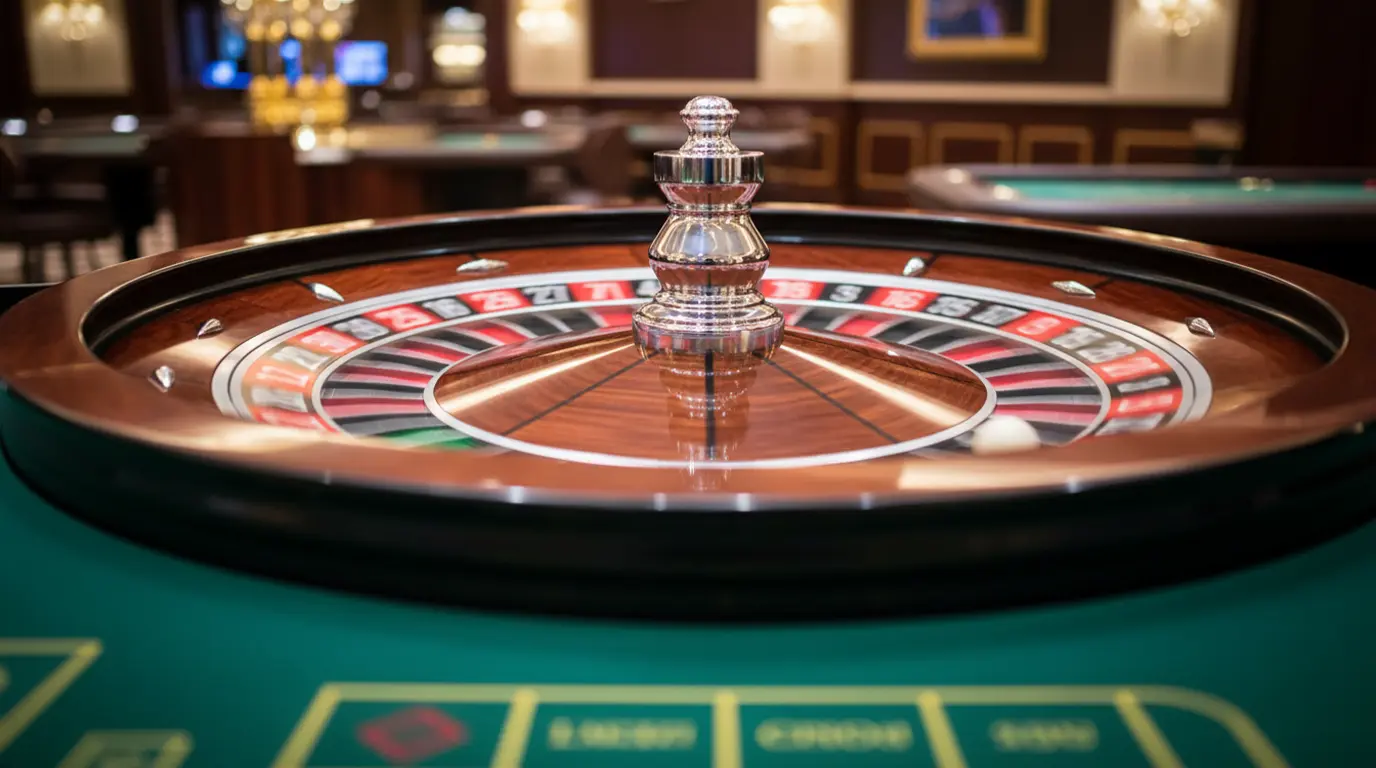
Roulette Without UK Betting Limits
Roulette at UKGC-licensed casinos comes with invisible fences. Maximum bets on inside numbers cap at levels that strip excitement from the game. Table limits on outside bets constrain anyone seeking meaningful action. The mandatory session breaks interrupt precisely when concentration matters. Non-GamStop casinos remove these barriers, restoring roulette to its proper form.
The appeal is straightforward: higher limits across all bet types. Where UK sites might cap straight-up number bets at fifty pounds, offshore tables often accept five hundred or more. Outside bets scale correspondingly. Players with substantial bankrolls can finally size their wagers to match their risk tolerance rather than regulatory assumptions about what constitutes acceptable gambling.
Game variety expands outside UK regulation too. Lightning Roulette, Immersive Roulette, and other innovative formats appear without restriction. Some variants banned or limited under UKGC rules—those with multipliers, rapid gameplay, or features deemed too stimulating—operate freely at non-GamStop casinos. The full Evolution Gaming catalogue opens up rather than the curated UK version.
Live dealer roulette represents the strongest case for offshore play. VIP tables with limits reaching tens of thousands per spin, private tables for high rollers, and reserved seating arrangements simply don’t exist in the regulated UK ecosystem. The infrastructure for serious roulette play migrated offshore years ago, following the money that UK restrictions pushed away.
None of this changes roulette’s fundamental mathematics. European roulette maintains its 2.7% house edge. American roulette keeps its 5.26% disadvantage. The wheel doesn’t know which regulator licensed the casino. What changes is your ability to engage with those odds on terms you choose—higher stakes when desired, longer sessions when preferred, and access to every variant the industry has developed.
The trade-off mirrors all non-GamStop gambling: freedom exchanged for reduced protection. Roulette’s purely chance-based nature makes this particularly stark. No skill offsets the house edge. Your only decisions involve bet selection and sizing—both unrestricted at offshore casinos, both potentially consequential without external limits enforcing moderation.
Best Non-GamStop Casinos for Roulette
Quality roulette requires more than a spinning wheel graphic. The best non-GamStop roulette sites combine extensive game selection, adequate table limits, reliable software, and crucially, trustworthy payout processing. Finding this combination requires looking beyond marketing claims.
Live dealer partnerships define premium roulette experiences. Evolution Gaming powers the industry’s best live tables—their presence indicates serious infrastructure. Pragmatic Play Live offers compelling alternatives with different presentation styles. Ezugi provides additional options. Casinos relying solely on unknown live providers often deliver inferior streaming, questionable fairness verification, and generally underwhelming experiences.
Table limit ranges reveal target audiences. Sites capping roulette bets below one thousand pounds cater to recreational players. Casinos offering VIP tables with ten thousand pound limits or higher have built infrastructure for serious play. The limits available tell you who the operator expects as customers—and whether they’re equipped to handle substantial action.
RNG roulette quality varies significantly by provider. NetEnt, Play’n GO, and established developers deliver properly randomised outcomes with transparent rules. Lesser-known studios sometimes offer games with unclear randomisation or modified payout structures. Stick to recognised providers for automated play.
Variant selection matters for players seeking specific formats. Not every non-GamStop casino carries Lightning Roulette or Double Ball Roulette. If particular games appeal, verify availability before depositing. Demo modes or game lobbies typically show full catalogues without requiring funds.
Payment processing reliability determines whether wins actually reach you. The best roulette means nothing if withdrawal difficulties follow. Research casino payout reputations through player forums and review communities. Consistent reports of delays or denied withdrawals should disqualify any operator regardless of game selection.
Bonus terms rarely favour roulette players. Most casino bonuses exclude or heavily restrict roulette contribution toward wagering requirements—sometimes 10% or even 0%. Welcome offers attractive for slot players might prove worthless at the roulette table. Check contribution rates before claiming any bonus if roulette is your primary game.
Roulette Variants at Offshore Casinos
Non-GamStop casinos typically offer broader roulette variety than UK-regulated alternatives. Understanding variant differences helps identify games matching your preferences and risk tolerance.
European roulette provides the standard baseline. Single zero, 37 pockets, 2.7% house edge on all bets. This remains the most common format and the most mathematically favourable standard variant. Most non-GamStop casinos feature European roulette prominently in both live and RNG formats.
French roulette adds the La Partage rule, returning half of even-money bets when the ball lands on zero. This drops the effective house edge on outside bets to 1.35%—among the best odds available in any casino game. Some variants include En Prison as an alternative, holding even-money bets for another spin rather than returning half immediately. French roulette appears less commonly but rewards players who seek it out.
American roulette includes both single and double zero pockets, increasing total pockets to 38 and house edge to 5.26%. The mathematics never favour choosing American over European unless American is literally the only option available. Some players prefer its layout or aesthetics, but the numbers argue against it.
Lightning Roulette adds random multipliers up to 500x on straight-up number bets each spin. The base payout on numbers drops from 35:1 to 29:1 to fund the multipliers, slightly increasing overall house edge while dramatically increasing variance. The format suits players seeking occasional large wins over steady expected returns.
Immersive Roulette uses multiple camera angles and slow-motion ball tracking for enhanced presentation. The game mechanics remain standard European roulette—only the viewing experience differs. It’s purely an aesthetic choice with no mathematical implications.
Double Ball Roulette launches two balls simultaneously, with both needing to land on your selection for inside bet wins. The changed dynamics create different betting strategies and higher volatility. It’s a distinct game rather than a simple variant.
Speed and rapid variants condense spin cycles for faster gameplay. Auto-roulette runs without dealers, using automated ball launches for maximum spin frequency. These suit players prioritising volume over atmosphere but compress sessions into shorter timeframes—the same house edge extracts expected losses faster.
Live Roulette at Non-GamStop Sites
Live dealer roulette delivers the closest online approximation to physical casino play. Real wheels, real dealers, real-time streaming—the format answers trust concerns while providing social elements absent from RNG games.
Evolution Gaming dominates live roulette production. Their studios operate across multiple locations with consistent quality standards. Tables range from entry-level with modest limits to VIP rooms accommodating serious players. The production values—camera angles, dealer presentation, interface design—set industry benchmarks. Most premium non-GamStop casinos feature Evolution as their primary live provider.
Table limit stratification serves different player segments. Standard tables typically accept bets from one pound to several thousand on outside positions, with inside bet limits scaling appropriately. VIP and high-roller tables push maximums significantly higher—ten thousand, fifty thousand, even higher at dedicated venues. Accessing top-tier tables often requires VIP status or direct arrangement with casino management.
Private tables exist for the highest-volume players. These dedicated wheels run exclusively for individual players or small groups, eliminating wait times between spins and providing personalised service levels. They represent the pinnacle of live roulette experience but require substantial action to warrant access.
Streaming quality depends on your connection as much as casino infrastructure. HD streams require stable bandwidth. Mobile connections may struggle during peak times. Before committing significant funds, test stream reliability during your typical playing hours. Laggy or interrupted feeds frustrate gameplay and potentially affect bet placement timing.
Dealer interaction adds human elements. Chat functions allow conversation with dealers and other players. Regular players at specific tables often develop familiarity with dealers—a social dimension entirely absent from RNG play. Whether this matters depends on personal preference, but it distinguishes live roulette as a genuinely different experience.
Physical wheel verification provides psychological comfort some players need. Watching an actual ball settle into an actual pocket answers randomness concerns that RNG graphics cannot. Both formats undergo fairness certification, but visible mechanics offer different assurance than trust in algorithms.
Betting Systems and Roulette Reality
Betting systems promise structured approaches to roulette. Martingale, Fibonacci, D’Alembert, Labouchère—each offers a framework for bet sizing. None changes the fundamental mathematics. Understanding why helps avoid expensive misconceptions.
The Martingale system doubles bets after losses, aiming to recover everything with one win. In theory, eventual wins erase accumulated losses plus yield one unit profit. In practice, table limits and bankroll constraints break the system. A losing streak of eight or ten spins—unusual but not rare—requires astronomical bets to continue doubling. The system works until it catastrophically doesn’t.
Fibonacci and similar progression systems space bet increases more gradually than Martingale. They extend runway before hitting limits but still depend on winning before bankroll or table maximum intervenes. The house edge applies to every spin regardless of bet size or previous results. Mathematical expectation remains negative regardless of progression structure.
Flat betting—consistent wager sizes regardless of outcomes—avoids the catastrophic failure modes of progressive systems. It doesn’t overcome the house edge either, but it prevents single sessions from wiping out entire bankrolls. Many experienced players prefer flat betting’s stability over progressive systems’ volatility.
No system overcomes the house edge because each spin is independent. The wheel has no memory. Previous results don’t influence future outcomes. A number isn’t “due” after absence. Hot numbers aren’t mathematically likely to repeat. These are cognitive biases, not probability laws. Roulette generates random results within a framework that guarantees long-term casino advantage.
Non-GamStop casinos enable higher limit systems play than UK sites allow. This isn’t necessarily beneficial. Higher limits mean larger potential losses during the losing streaks that eventually break progressive systems. The freedom to bet more doesn’t change expected outcomes—it just allows faster arrival at them.
If systems appeal despite the mathematics, treat them as entertainment frameworks rather than profit strategies. The structure might enhance enjoyment. Just don’t expect it to transform negative expectation into positive results. That transformation requires changing the game’s rules, not the player’s betting patterns.
Spinning Smart at Non-GamStop Tables
Non-GamStop roulette offers expanded freedom—higher limits, more variants, uninterrupted sessions. Using that freedom intelligently requires acknowledging both opportunities and risks the regulatory absence creates.
Choose European or French roulette whenever available. The house edge difference between European’s 2.7% and American’s 5.26% compounds across sessions. French roulette’s La Partage rule at 1.35% on even-money bets provides even better odds. Game selection represents your only mathematical decision in roulette—make it count.
Set loss limits before playing and honour them during sessions. Roulette’s purely random nature generates streaks that feel meaningful but aren’t. Losing runs end when they end, not when betting systems or intuition predict. Predetermined exit points prevent chasing losses beyond comfortable boundaries. The casino won’t impose these limits; you must.
Bankroll sizing matters more at higher limits. The freedom to bet five hundred per spin doesn’t mean you should. Standard guidance suggests risking no more than a small percentage of gambling funds per session, with individual bets sized as fractions of session bankrolls. Higher available limits don’t change sound money management principles.
Win targets provide positive exit triggers complementing loss limits. Deciding to stop after doubling your session stake—or any other target—locks in wins that continued play might erode. The discipline to walk away ahead proves as valuable as the discipline to stop when behind.
Recognise roulette for what it is: entertainment with negative expected value. No strategy, system, or game selection transforms it into a winning proposition. Non-GamStop casinos simply offer that entertainment with fewer restrictions. Enjoy the bigger stage while respecting the same mathematics that apply everywhere. The wheel doesn’t care about jurisdiction—it takes its percentage regardless.